


Caustic Soda
Chemical formula: NaOH
Other names: liquid soda, baking soda, caustic soda, sodium hydroxide
Grades: Caustic
Packaging: Paper-making
Lecithin
Chemical formula: C42H80NO8P
Other names: Listin
Grades: Listin
Packaging: food industry

Lignite
Chemical formula: C180H145O31N5S
Organic content: Drilling lignite consists of high organic materials, among which may be cellulose, hemicellulose, lignin and resin.
Moisture: Drilling lignite produces less energy in the combustion process due to its high moisture content.
Sulfur content: This type of coal may have a significant amount of sulfur, which increases the emission of polluting gases into the air during the combustion process.

Silicon Nano Oxide
Chemical formula: SiO2
Other names: silicon nano oxide
Grades: silicon nano oxide
Packaging: ceramic tiles

Sodium Acetate
Chemical formula: CH3COONa
Other names: Sodium acetate
Grades: Sodium Acetate
Packaging: food industry
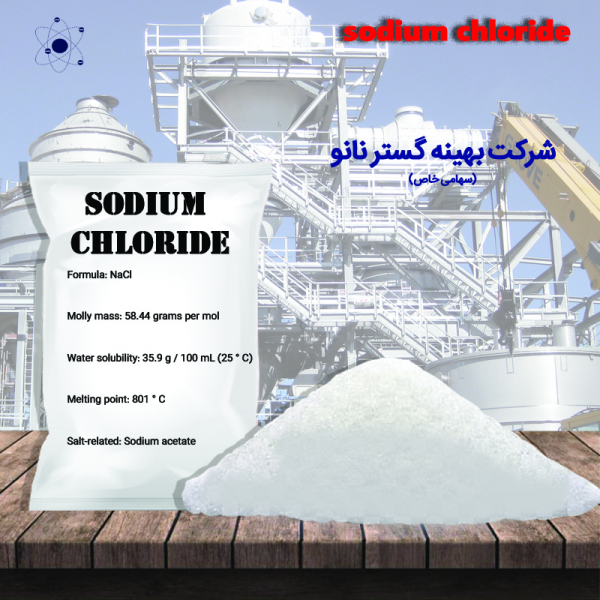
Sodium Chloride
Chemical formula: NaCl
Melting and solubility in water: sodium chloride dissolves completely in water and aqueous solutions are formed from it called salt water. This feature allows sodium chloride to be used as a solvent in various mixtures and solutions.
Thermal stability: sodium chloride has high thermal stability and does not decompose at high temperatures, which makes it a suitable material in thermal processes such as reduction and melting of minerals.
Electrical properties: Sodium chloride is used in the production of electrolytes and electrical media because it contains sodium and chloride ions.

Sodium Chlorite
Chemical formula: NaClO2
Other names: sodium chlorite
Grades: sodium chlorite
Packaging: Rubberizing


Sodium Humate
Chemical formula: C9H8Na2O4
Reactive stability: sodium humate has a reactive stability that is created due to the reaction between humic acid (from organic soil decomposition) and sodium hydroxide.
Complexing property: This compound has complexing property and can form stable complexes with various metal ions.
Increasing solubility: sodium humate can increase the solubility of some insoluble substances in water and help to form solutions that can be used in agriculture, industry and technology.

Sodium phosphate
Chemical formula: Na₃PO₄
Variable chemical composition: sodium phosphate can exist in different types of compounds and with different ratios of sodium and phosphate. This feature makes sodium phosphate used in various applications.
Texturing properties: sodium phosphate is used as a base and additive in the production of food products such as processed meat and primary products due to its texturing properties and increasing the strength of materials.
Preserving properties: Sodium phosphate is used as a food additive such as preserving and baking salts to help extend the shelf life of products.


Sodium Silicate
Chemical formula: Na₂SiO₃
Chemical stability: Sodium silicate has a strong chemical stability due to its diverse bonds and can maintain stability in different conditions including temperature and pH.
Ability to form gel: by adding acid to sodium silicate solution, silicate gel can be formed. This gel is usually used in the industry of producing catalysts and laboratory materials.
Thermal resistance: sodium silicate can show good stability at high temperatures and is used as thermal coating in some industrial processes.
Sodium Sulfate
Chemical formula: Na2SO4
Other names: sodium sulfate
Grades: sodium sulfate
Packaging: Glass-making

Surbitol
Chemical formula: C6H14O6
Other names: Sorbitol
Grades: Sorbitol
Packaging: Food industry